Chưa phân loại
Nail Tech Training Tools: Academy-Ready Starter Kit
Nail Tech Training Tools: Academy-Ready Starter Kit
Starting nail technician training does not mean buying every tool a professional may eventually use. The right nail tech training tools should cover essential services while helping students develop proper technique, tool handling, cleaning, and maintenance habits.
A practical starter kit can support most basic manicure and pedicure training without overwhelming beginners with unnecessary variations. This guide explains the essential nail tech training tools every student should have, what each tool does, and when it makes sense to upgrade or expand the kit.
Essential Nail Tech Training Tools for Beginners
The best nail tech training tools for beginners are practical, versatile, and easy to maintain. A well-planned starter kit should include the following core tools.
1. Stainless Steel Cuticle Nipper
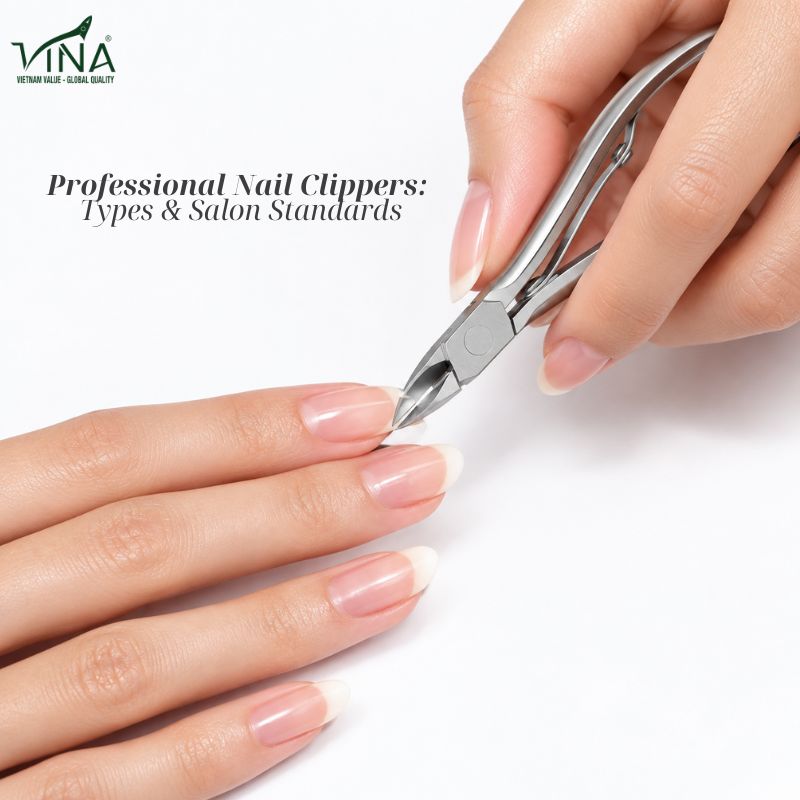
A stainless steel cuticle nipper is one of the most important nail tech training tools for students learning professional manicure techniques. A half-jaw design provides a practical balance between control and cutting access for routine cuticle work.
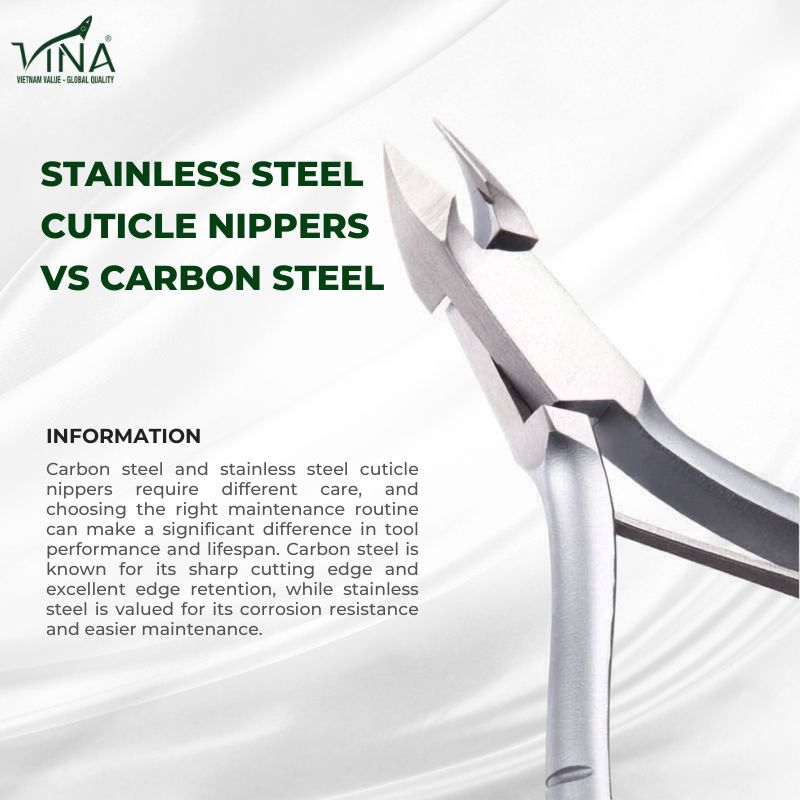
Stainless steel is particularly suitable for training environments because it offers good durability and resistance to corrosion when properly cleaned, disinfected, dried, and stored.
Vina Nippers’ VNC-01 through VNC-09 stainless steel range includes different handle and jaw configurations, giving academies flexibility when selecting tools for beginner training kits.
2. Carbon Steel Nail Nipper
A nail nipper is another essential tool in a student’s training kit. It is designed primarily for trimming nails and can be useful during both manicure and pedicure practice.
Carbon steel nail nippers are valued for their sharp cutting performance and can be a suitable option as students become more familiar with professional tool handling. However, carbon steel requires more attention to cleaning, drying, and storage because moisture can increase the risk of corrosion.
Vina Nippers’ VNN range includes single-spring models such as VNN-18, VNN-19, and VNN-20, providing options for technicians developing their cutting control.
For beginner programs, academies should consider both tool performance and students’ ability to maintain the tools correctly.
3. Cuticle Pusher
A cuticle pusher is a simple but important part of a set of nail tech training tools. It is used before trimming to gently push back non-living cuticle tissue and expose the area that requires further care.
Learning to push before trimming helps students understand how much tissue actually needs to be removed rather than relying on cutting alone. This makes the cuticle pusher an important tool for developing controlled, precise manicure techniques.
4. Nail Files and Buffers
Files and buffers are basic nail tech training tools used throughout manicure and pedicure services.
Students should learn how different file grits affect nail shaping and surface preparation. Buffers can then be introduced for appropriate finishing and smoothing applications.
Because files and buffers are available in many shapes and grits, a beginner kit does not need every available variation. A small selection of commonly used options is usually sufficient for foundational training.
5. Sanitizing and Cleaning Supplies
Cleaning and disinfection should be taught alongside tool handling from the beginning of nail technician training.
Appropriate cleaning supplies, disinfectant products, disposable materials, and storage containers should therefore be considered part of the overall nail tech training tools setup.
Students should understand the difference between cleaning, disinfection, and sterilization and follow the procedures required by their academy, salon, and applicable local regulations.
When to Add More Nail Tech Training Tools
Students do not need every professional tool on their first day. Once they develop consistent technique and understand basic tool maintenance, academies can gradually introduce additional nail tech training tools.
Quarter-Jaw Cuticle Nipper
A quarter-jaw cuticle nipper can be added when a technician wants greater access and precision for detailed cuticle work.
For training programs, introducing different jaw sizes after students become comfortable with a standard starter nipper can make it easier for instructors to explain the practical differences between tool designs.
Carbon Steel Cuticle Nipper
A carbon steel cuticle nipper can be considered as a more specialized addition once a student demonstrates consistent tool-care habits.
Carbon steel can provide excellent cutting performance, but it requires careful drying and storage. For that reason, stainless steel is often a practical starting point for beginner nail tech training tools, while carbon steel can be introduced as students progress.
Double-Spring Nail Nipper
A double-spring nail nipper may be useful for technicians who regularly perform pedicure services or work with thicker toenails.
Rather than requiring every student to purchase multiple nail nippers immediately, academies can introduce additional models according to the services students are learning and the level of control they have developed.
Why Material Matters When Choosing Nail Tech Training Tools
Tool material matters because students are still developing both technical skills and maintenance habits.
Stainless steel is generally a practical material for beginner nail tech training tools because it offers good corrosion resistance and can be easier to maintain in a busy training environment when proper cleaning and disinfection procedures are followed.
Carbon steel can offer excellent cutting characteristics, but it is less tolerant of prolonged moisture exposure. Students using carbon steel need to understand that cleaning alone is not enough—the tool should also be properly dried and stored.
For this reason, an academy may choose stainless steel for its standard starter kit and introduce carbon steel as students gain experience with professional tool maintenance.
The most appropriate material ultimately depends on the training program, intended service, maintenance procedures, and instructor recommendations.
Building Nail Tech Training Tools for an Entire Academy
Choosing nail tech training tools for an entire class is different from purchasing a kit for one technician.
Academies should consider several factors before placing a bulk order:
- Consistency: Giving students the same or comparable specifications makes demonstrations and troubleshooting easier for instructors.
- Quality control: Consistent manufacturing specifications help reduce differences in tool performance between students.
- Maintenance training: Standardized tools allow instructors to teach cleaning, disinfection, drying, storage, and maintenance using the same examples.
- Bulk purchasing: Academy orders can provide better purchasing efficiency than buying individual tools separately.
- Sample evaluation: Requesting samples before a larger order allows instructors to evaluate cutting performance, ergonomics, finish, and overall suitability.
- Replacement planning: Training programs should consider replacement tools for damaged or lost items during the course.
For academies, working directly with a manufacturer can make it easier to standardize nail tech training tools across an entire student cohort.
Vina Nippers manufactures professional nail nippers in both stainless steel and carbon steel, with multiple jaw and spring configurations suitable for different training and professional applications.
What Should a Nail Tech Training Kit Cost?
The cost of a nail tech training tools kit depends on the number of tools, material, specifications, and purchasing volume.
A basic beginner kit does not necessarily need premium versions of every tool. In fact, training programs may benefit from establishing a practical core kit first and adding specialized tools as students progress.
For individual students, this approach reduces unnecessary upfront spending.
For academies, purchasing standardized kits in larger quantities can also make budgeting and inventory management easier. A training program should consider not only the initial purchase price but also durability, maintenance requirements, replacement costs, and supplier consistency.
The goal is not to create the most expensive kit. The goal is to create a kit that gives students the right tools to learn professional techniques effectively.
How to Choose the Right Nail Tech Training Tools
Before purchasing nail tech training tools, academies and students should evaluate more than appearance or price.
Consider these factors:
Tool Material
Choose stainless steel or carbon steel according to the intended application, maintenance capability, and training level.
Jaw and Spring Design
Different jaw sizes and spring configurations can provide different levels of cutting access, control, and handling.
Ergonomics
Students may use their tools for extended periods, so comfortable handling and appropriate tool balance are important considerations.
Manufacturing Quality
Consistent alignment, smooth movement, sharp cutting edges, and appropriate finishing can make a significant difference in practical training.
Maintenance Requirements
Students should understand how each tool should be cleaned, disinfected, dried, lubricated when appropriate, and stored.
Supplier Support
For academies purchasing large quantities, supplier support, sample availability, replacement policies, and volume pricing can be as important as the tool itself.
Frequently Asked Questions About Nail Tech Training Tools
What nail tech training tools does a beginner need?
A basic beginner kit can include a stainless steel cuticle nipper, nail nipper, cuticle pusher, nail files, buffers, and appropriate cleaning and disinfection supplies. The exact kit should reflect the services covered by the training program.
Should beginners use stainless steel or carbon steel nail tools?
Stainless steel is often a practical starting material because it provides good corrosion resistance and is relatively easy to maintain. Carbon steel can be introduced as students become more confident with proper drying and storage procedures.
When should a nail technician add more specialized tools?
Additional nail tech training tools should be introduced as the student’s technique and service range develop. Quarter-jaw nippers, different spring configurations, and specialized nail nippers can be added when they provide a clear training or service benefit.
Do nail academies get bulk pricing on nail tools?
Many manufacturers offer volume pricing for academy and professional orders. Academies should ask about minimum order quantities, sample availability, specifications, replacement policies, and pricing before placing a cohort-wide order.
Can academies request samples before ordering?
Yes. Requesting samples can help instructors evaluate tool quality, ergonomics, cutting performance, and suitability before standardizing nail tech training tools across a full class.
Build a Practical Nail Technician Starter Kit
The best nail tech training tools are not necessarily the most advanced or expensive options. A successful training kit should give students the essential equipment needed to develop safe, controlled, and professional techniques while also teaching proper tool-care habits.
For beginner programs, a practical combination of stainless steel cuticle nippers, nail nippers, cuticle pushers, files, buffers, and appropriate cleaning and disinfection supplies can provide a strong foundation.
As students progress, academies can introduce additional jaw sizes, spring configurations, and steel types according to their curriculum and service requirements.
Vina Nippers manufactures stainless steel and carbon steel nail nippers in multiple configurations for professional and academy applications. If you are sourcing nail tech training tools for an individual student, salon, distributor, or full academy cohort, explore the available range or contact Vina Nippers for sample and wholesale options.

Most viewed article

Top 5 Best Cuticle Nippers for Nail Technicians

Mastering the Art of Choosing the Best Cuticle Nippers: A Guide

How to Use Cuticle Nippers Properly: A Step-by-Step Guide by Vina Nipper

Toenail Nippers vs. Cuticle Nail Cutter: Choosing the Best Tools for Nail Car