Chưa phân loại
Professional Cuticle Nippers: 2026 Buying Guide
Professional Cuticle Nippers: 2026 Buying Guide
Choosing the right professional cuticle nippers involves more than looking at price or brand name. Steel type, jaw size, sharpening quality, hinge construction, and spring design can all affect cutting precision, comfort, maintenance, and long-term performance.
Whether you work in a busy nail salon, provide professional manicure services, or purchase tools for a beauty business, this guide explains how to compare cuticle nippers for professionals and choose a model that fits your specific needs.
What Makes a Good Professional Cuticle Nipper?
Professional nail technicians should evaluate a nipper based on its construction and performance rather than price alone.
Five factors are particularly important:
- Steel type
- Jaw size
- Sharpening quality
- Hinge construction
- Spring mechanism
Understanding these characteristics makes it easier to distinguish a professional-grade tool from a basic consumer product.
Steel Type: High-Carbon Steel vs. Stainless Steel
Two common materials used for professional nail tools are high-carbon steel and stainless steel, also known as inox.
High-Carbon Steel Nippers
High-carbon steel can be sharpened to a very fine cutting edge and is often chosen by technicians who prioritize cutting performance.
The main consideration is maintenance. Carbon steel requires careful drying, storage, and regular maintenance to help protect the tool from corrosion and maintain its cutting performance.
For experienced technicians who prioritize a sharp cutting edge and are comfortable with regular maintenance, high-carbon steel can be an excellent option.
Stainless Steel Nippers
Stainless steel, or inox, is known for its corrosion resistance and relatively low maintenance requirements.
This makes stainless steel tools a practical choice for busy salons where instruments are frequently cleaned and sterilized.
Neither material is automatically better for every user. The right choice depends on frequency of use, maintenance practices, working environment, and desired cutting performance.
Choosing the Right Jaw Size
Jaw size plays an important role in determining how a nipper feels and performs during professional use.
The three common options are:
- Quarter jaw
- Half jaw
- Full jaw
Quarter-Jaw Nippers
A quarter-jaw design has a shorter cutting edge and provides greater control during detailed work.
It can be useful when working around tight areas of the nail plate or when precise trimming is more important than removing a larger amount of tissue at once.
Half-Jaw Nippers
A half-jaw model offers a balance between control and cutting efficiency.
It is a versatile option for technicians who want sufficient cutting length while maintaining good control during everyday services.
Full-Jaw Nippers
A full-jaw model has a longer cutting edge and can remove more tissue with each cutting motion.
Experienced technicians may prefer this design when working with thicker cuticles or during high-volume salon services.
There is no universally best jaw size. The right option depends on the service, technique, client requirements, and amount of tissue being trimmed.
Professional Cuticle Nippers: Sharpening and Hinge Quality
Sharpening quality is one of the most important factors separating professional-grade nippers from lower-quality tools.
A well-finished pair of professional cuticle nippers should open and close smoothly, with properly aligned cutting edges and a consistent cutting action.
Hand-sharpening and hand-finishing can help manufacturers fine-tune the cutting edges and hinge. However, buyers should look beyond the phrase “hand-sharpened” and ask how the manufacturer actually checks each tool before shipment.
When evaluating a sample, check:
- Hinge movement
- Blade alignment
- Cutting-edge consistency
- Smooth opening and closing
- Overall finishing
- Cutting performance
These details can have a significant impact on how the nipper feels during repeated professional use.
Professional Cuticle Nippers: Single Spring vs. Double Spring
Spring mechanism is another factor to consider when selecting professional cuticle nippers.
Single-Spring Professional Cuticle Nippers
A single spring design can provide a lighter and simpler feel during use.
Some technicians may prefer this configuration during long working sessions because of its overall feel and finger response.
Double-Spring Professional Cuticle Nippers
A double spring can provide a firmer return after each cut.
Some technicians prefer this design for repetitive cutting because of the additional spring resistance and controlled return.
Neither design is automatically better. Personal technique, hand strength, working hours, and comfort should all be considered when selecting professional cuticle nippers.
Professional Cuticle Nippers vs. Cuticle Trimmers and Cuticle Cutters
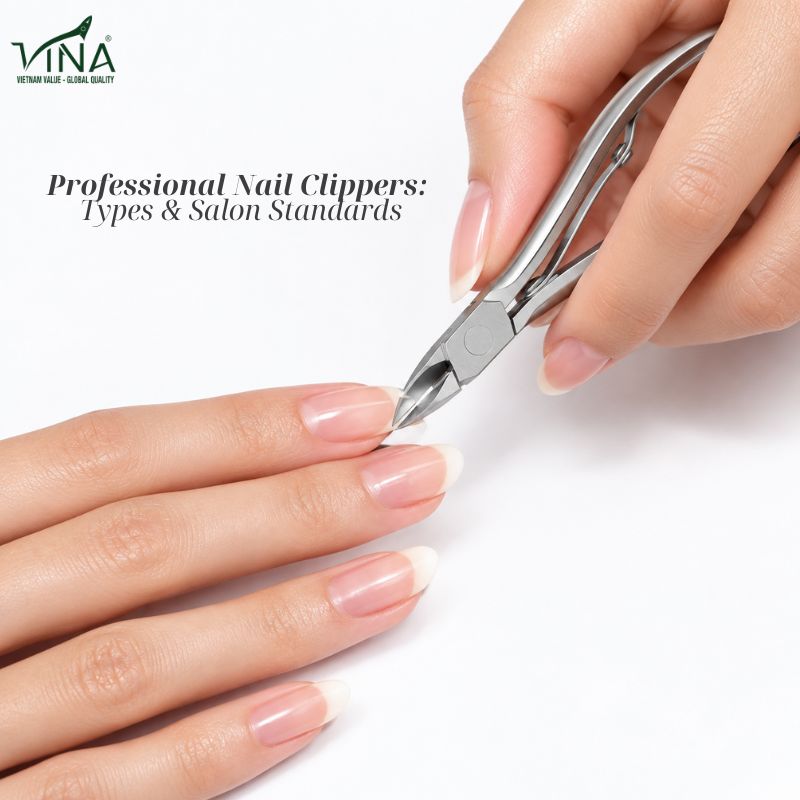
If you search for professional cuticle nippers, professional cuticle trimmers, or cuticle cutters, you may find many of the same products.
In the professional nail industry, these terms are often used to describe a similar type of spring-loaded, plier-style tool with two cutting jaws designed for trimming dead skin and hangnails around the nail.
Terminology can vary by brand, region, and product listing.
However, cuticle scissors are different because they use a scissor-style cutting mechanism rather than two nipping jaws.
When purchasing professional cuticle nippers, always check the product description and images to confirm the actual tool design rather than relying only on the product name.
Does Manufacturing Origin Matter?
The manufacturing process can have a significant impact on the consistency and performance of professional nail tools.
Important production stages include steel forming, heat treatment, grinding, sharpening, polishing, assembly, and quality inspection. These processes require suitable equipment and skilled workers.
Vietnam has an established manufacturing base for nail tools and professional manicure instruments.
Vina Nippers manufactures nail tools directly at its facility in Vietnam rather than sourcing finished products through a trading company. This direct manufacturing model allows the company to manage key production stages and communicate product specifications directly with customers.
Vina Nippers Professional Cuticle Nipper Models
Vina Nippers manufactures different professional cuticle nippers using stainless steel and high-carbon steel options.
The available models include:
Stainless Steel VNC Series
The stainless steel VNC range includes models such as VNC-01, VNC-02, VNC-08, and VNC-07V/08V/09V variants, depending on current product availability.
These models are suitable for customers looking for corrosion resistance and relatively easy maintenance, particularly in professional environments with frequent cleaning and sterilization.
High-Carbon Steel VNC Series
The high-carbon steel range includes models such as VNC-333, VNC-666, VNC-999, and VNC-501, depending on current availability.
These models are designed for users who prioritize cutting performance and a sharp cutting edge while following appropriate maintenance procedures.
Both product lines are hand-sharpened before shipment. International buyers can contact Vina Nippers regarding wholesale, OEM requirements, product specifications, and available models.
How to Choose Cuticle Nippers for Your Work
There is no single tool that is ideal for every technician.
Your choice should depend on the type of services you perform, your experience level, and the type of cuticle you typically work with.
For Experienced Nail Technicians
Experienced technicians who regularly work with thicker cuticles or high-volume salon services may prefer a full-jaw model, particularly in high-carbon steel.
This combination can provide a longer cutting edge and strong cutting performance when properly maintained.
For Beginners
Beginners may prefer a stainless steel half-jaw model because it provides a balance between control, maintenance, and cutting efficiency.
However, proper technique and training remain more important than simply choosing a particular jaw size.
For Thick or Overgrown Cuticles
For thicker or overgrown cuticles, a full-jaw model can remove more tissue with each cutting motion.
High-carbon steel may also be considered when cutting performance and edge sharpness are key priorities.
For Precision Work
A quarter-jaw model can provide greater control during detailed work around the nail plate.
Technicians who regularly perform precision services may prefer this design when accuracy is more important than cutting speed.
Quick Guide to Choosing Professional Nail Nippers
| Your Work | Recommended Option |
| High-volume salon services | Full jaw + high-carbon steel |
| Learning cuticle work | Half jaw + stainless steel |
| Thick or overgrown cuticles | Full jaw + high-carbon steel |
| Precision or detailed work | Quarter jaw |
| Frequent cleaning and sterilization | Stainless steel |
| Priority on cutting performance | High-carbon steel |
Jaw size and steel type are two of the most important factors, but they are not the only considerations.
Hand size, grip strength, technique, service frequency, and personal comfort can also influence your choice.
For this reason, experienced technicians may keep several types of nail nippers in rotation instead of relying on one tool for every service.
How Much Do Professional Cuticle Nippers Cost?
The price of professional cuticle nippers can vary considerably depending on steel type, manufacturing processes, sharpening, finishing, brand positioning, packaging, and distribution.
High-carbon steel models or tools requiring additional hand-finishing may cost more than basic mass-produced products.
However, price alone does not necessarily indicate quality.
When comparing professional nail tools, look at the actual specifications and manufacturing process. For salons, distributors, and professional buyers, sourcing directly from a manufacturer may also help reduce additional distribution costs.
How to Care for Your Nippers
Even high-quality professional cuticle nippers require proper maintenance.
After cleaning or disinfection, dry the tool thoroughly instead of leaving moisture on the metal surface. Proper drying is especially important for high-carbon steel because it is more susceptible to corrosion than stainless steel.
For better long-term performance:
- Clean and dry the tool after use
- Store it in a dry environment
- Avoid dropping or hitting the cutting edges
- Keep the jaws protected from other metal tools
- Check the hinge regularly
- Resharpen the tool when cutting performance declines
Proper maintenance can help extend the useful life of your nail tools and maintain consistent cutting performance.
How to Identify High-Quality Professional Nippers
When evaluating professional cuticle nippers, look for specific evidence of manufacturing quality rather than relying on generic marketing claims.
Check whether:
- The manufacturer clearly identifies the steel type
- The hinge operates smoothly
- The cutting edges align properly
- The surface finish is consistent
- The manufacturer explains its sharpening process
- Maintenance or resharpening guidance is available
- Product specifications are clearly documented
A manufacturer that can explain its materials, production process, sharpening method, and quality-control procedures gives buyers more information to evaluate before purchasing.
Frequently Asked Questions
What Are the Best Professional Cuticle Nippers for Beginners?
A stainless steel half-jaw model can be a practical starting point for beginners because it provides a balance between control, maintenance, and cutting efficiency.
The right choice ultimately depends on the user’s technique and training.
What Are Quarter-Jaw Nippers Used For?
Quarter-jaw nippers have a shorter cutting edge and are designed to provide greater control during detailed work.
They can be useful around smaller areas of the nail plate where precision is more important than cutting a large area at once.
How Can I Tell if a Cuticle Nipper Is Good Quality?
Check the steel specification, hinge movement, blade alignment, finishing quality, and sharpening process.
A reliable manufacturer should be able to explain how its tools are produced and inspected before shipment.
Are More Expensive Cuticle Nippers Better?
Not necessarily.
Price can reflect materials, manufacturing processes, hand-finishing, brand positioning, packaging, and distribution costs.
Instead of judging a tool by price alone, compare its steel type, construction, sharpening process, specifications, and manufacturer.
How Often Should Professional Cuticle Nippers Be Sharpened?
The sharpening interval depends on steel type, frequency of use, cutting conditions, and maintenance.
Tools used frequently in professional environments generally require more attention than those used occasionally.
Rather than following a fixed schedule, monitor cutting performance and have the tool professionally resharpened when the cutting edge begins to lose effectiveness.
Choose Vina Nippers for Professional Nail Tools
Vina Nippers manufactures professional nail tools in Vietnam, including cuticle nippers and nail nippers made from stainless steel and high-carbon steel.
With direct manufacturing capabilities, Vina Nippers supports international distributors, wholesalers, nail brands, and OEM customers looking for professional nail tools.
Whether you need professional cuticle nippers for salons, wholesale distribution, private-label products, or OEM projects, contact Vina Nippers to discuss available models, specifications, branding options, MOQ, and production requirements.

Most viewed article

Top 5 Best Cuticle Nippers for Nail Technicians

Mastering the Art of Choosing the Best Cuticle Nippers: A Guide

How to Use Cuticle Nippers Properly: A Step-by-Step Guide by Vina Nipper

Toenail Nippers vs. Cuticle Nail Cutter: Choosing the Best Tools for Nail Car