Chưa phân loại
How to Maintain Nail Tools: Cleaning & Care
How to Maintain Nail Tools: Cleaning & Care
Knowing how to maintain nail tools properly is essential for keeping cuticle nippers and nail nippers clean, sharp, safe, and functional for years. Proper nail tool maintenance involves four essential steps: cleaning, disinfection, thorough drying, and proper storage.
Skipping any of these steps can shorten a tool’s working life, regardless of the quality of the steel. A consistent maintenance routine helps prevent corrosion, protect cutting edges, maintain smooth hinge movement, and ensure reliable performance between uses.
In this guide, we explain how to maintain nail tools correctly, including the best practices for both carbon steel and stainless steel nail tools.
How to Maintain Nail Tools: Start With Proper Cleaning
Cleaning is the first step in any professional nail tool maintenance routine. It removes visible debris, oils, skin particles, and residue from the tool’s surface, cutting edge, and hinge.
When learning how to maintain nail tools, it is important to understand that cleaning and disinfection are two different steps. Cleaning should always happen before disinfection, not instead of it.
A tool may look visibly clean while still carrying microorganisms that require proper disinfection. For this reason, professional salons should always clean their nail tools thoroughly before moving on to the disinfection stage.
The recommended sequence is:
- Remove visible debris and residue.
- Clean the nail tool thoroughly.
- Disinfect according to the disinfectant manufacturer’s instructions.
- Dry the tool completely.
- Store it in a clean, dry location.
Simply wiping a nail nipper with a cloth does not replace proper cleaning and disinfection. Separating these steps is one of the most important principles of effective nail tool maintenance.
Disinfection: Match the Method to the Steel
Disinfection is an essential part of how to maintain nail tools, but both disinfectant concentration and contact time matter.
Always follow the instructions provided by the disinfectant manufacturer and the applicable salon hygiene requirements. Using a concentration that is too low may reduce effectiveness, while leaving tools submerged longer than recommended can create unnecessary moisture exposure.
Stainless steel cuticle nippers and nail nippers generally tolerate standard salon disinfection procedures well when the recommended concentration and contact time are followed.
Carbon steel tools require greater attention because prolonged exposure to moisture can increase the risk of corrosion. The disinfection process should still follow the appropriate product instructions, but the drying step immediately afterward becomes especially important for carbon steel.
For a detailed procedure, see our guide on how to disinfect cuticle nippers between clients.
Drying: An Essential Part of Nail Tool Maintenance
Drying is one of the most frequently rushed steps when considering how to maintain nail tools, yet it has a major impact on tool longevity.
After disinfection, nail tools should not simply be left in a wet tray to air-dry. Moisture remaining on the blade, hinge, or other metal surfaces can create prolonged exposure to water and contribute to corrosion.
This is particularly important for carbon steel tools, which are generally more susceptible to rust than stainless steel.
A simple drying routine can make a significant difference:
- Remove the tool from the disinfectant after the recommended contact time.
- Dry it immediately with a clean, appropriate towel.
- Pay particular attention to the hinge and cutting area.
- Make sure no visible moisture remains before storage.
- Store the tool only when it is completely dry.
If you want to know how to maintain nail tools for long-term professional use, never treat drying as an optional step. Proper drying is one of the simplest ways to reduce preventable corrosion.
Storage: Protect the Cutting Edge Between Uses
Proper storage is another important part of how to maintain nail tools because it protects two critical areas: the cutting edge and the hinge.
Storing nippers loose in a drawer with other metal instruments can cause the cutting edges to strike against other tools. Repeated contact may result in small chips, nicks, or uneven cutting performance that cannot always be corrected simply by sharpening.
A better approach is to store nail tools in a clean, dry, lined tray or individual protective pouch. This prevents unnecessary contact between metal surfaces while helping keep dust and debris away from the hinge.
Good storage practices include:
- Keep tools completely dry before storage.
- Avoid placing sharp edges directly against other metal instruments.
- Use a lined tray or individual pouch when possible.
- Keep the storage area clean and dry.
- Avoid unnecessary pressure on the cutting edges.
- Keep the hinge protected from dust and residue.
Proper storage is not only about organization. It is an important part of maintaining the performance, sharpness, and lifespan of professional nail tools.
How Steel Type Affects Nail Tool Maintenance
Understanding the steel type is another important consideration when learning how to maintain nail tools.
Carbon steel and stainless steel tools follow the same basic maintenance sequence:
Cleaning → Disinfection → Drying → Storage
However, the two materials are not equally forgiving when maintenance is inconsistent.
Carbon Steel Nail Tools
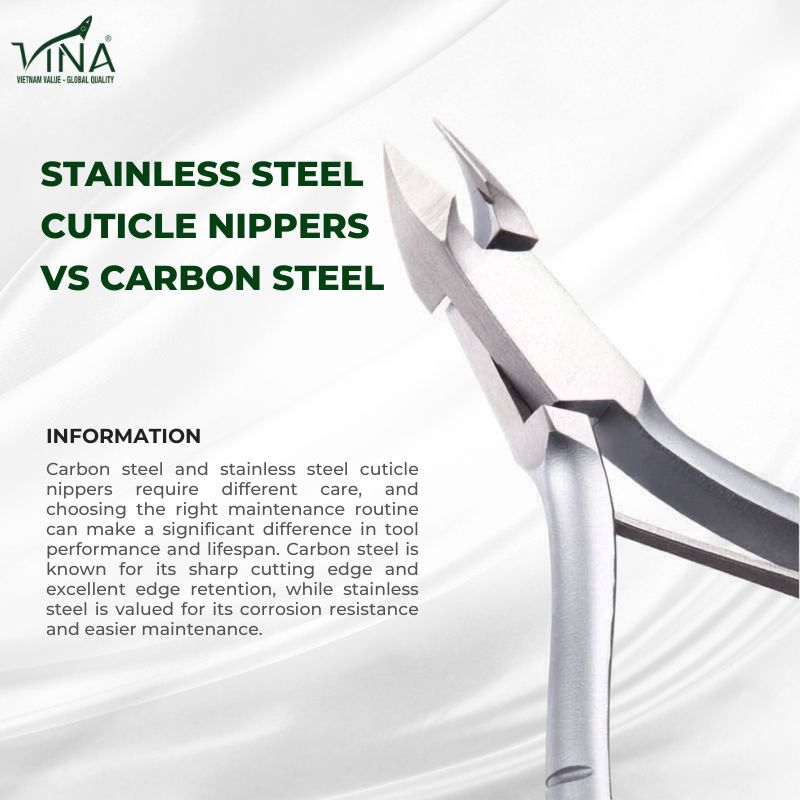
Carbon steel tools require especially careful drying because prolonged moisture exposure can contribute to rust and corrosion.
After disinfection, immediate and thorough drying is particularly important. Storing a carbon steel tool while it is still damp can increase the risk of corrosion over time.
Stainless Steel Nail Tools
Stainless steel offers greater resistance to corrosion, making it more forgiving when exposed to moisture. However, stainless steel tools still require proper cleaning, disinfection, drying, and storage to maintain their appearance and performance.
For salons using different types of nail tools, staff training should clearly identify which instruments are carbon steel and which are stainless steel.
Treating every tool identically without considering the steel type can lead to inconsistent maintenance results and differences in tool lifespan across a salon team.
For a more detailed comparison, see our guide to carbon steel vs. stainless steel nail tool maintenance.
Signs Your Nail Tool Maintenance Routine Needs Adjusting
Knowing the warning signs can help you determine whether your current approach to how to maintain nail tools needs improvement.
Watch for these common problems:
- Rust spots around the hinge: Often associated with moisture remaining on the tool after cleaning or disinfection.
- A gritty or stiff hinge: May indicate residue or debris accumulating around the joint.
- Cutting edges becoming dull quickly: Can result from improper storage or contact between blades and other metal tools.
- Different tool conditions among staff: May indicate that maintenance procedures are not being followed consistently.
- Uneven cutting performance: Can be a sign of cutting-edge damage caused by contact, improper handling, or normal wear.
Identifying these signs early allows a salon to adjust its maintenance process before minor problems become expensive tool repairs or replacements.
Frequently Asked Questions About How to Maintain Nail Tools
What is the correct order for nail tool maintenance: cleaning or disinfection first?
When learning how to maintain nail tools, remember that cleaning always comes first.
Remove visible debris and residue before applying the appropriate disinfectant. Disinfection should be performed on a physically clean surface, while the disinfectant’s recommended concentration and contact time should always be followed.
Why do my nail tools rust even though I disinfect them properly?
Rust is often related to moisture remaining on the tool after cleaning or disinfection.
This is especially important for carbon steel tools. If a tool remains wet in a tray or is stored before it is completely dry, prolonged moisture exposure can contribute to corrosion.
Proper drying is therefore a critical part of how to maintain nail tools, particularly when working with carbon steel.
How should I store cuticle nippers and nail nippers between uses?
Store them in a clean, dry, lined tray or individual protective pouch, with the cutting edges protected from contact with other metal instruments.
Proper storage helps reduce blade damage while keeping the hinge protected from dust and debris.
Does nail tool maintenance differ between carbon steel and stainless steel?
The basic process for how to maintain nail tools is the same for both materials:
Clean → Disinfect → Dry → Store
However, carbon steel requires greater attention to immediate and thorough drying because it is generally more susceptible to corrosion when exposed to moisture.
How often should nail tools be cleaned and disinfected?
Professional nail tools should be cleaned and appropriately disinfected after each use, according to applicable salon hygiene procedures and the disinfectant manufacturer’s instructions.
Always follow the specific requirements that apply to your salon and the products being used.
Consistent Maintenance Extends Nail Tool Life
Learning how to maintain nail tools does not require a complicated process. The most important factor is consistently following the correct sequence: cleaning, disinfection, thorough drying, and proper storage.
These simple habits help protect cutting edges, maintain smooth hinge movement, reduce corrosion, and extend the useful life of both cuticle nippers and nail nippers.
Vina Nippers manufactures both carbon steel and stainless steel nail tools designed for professional use. With the right maintenance routine, quality nail tools can deliver reliable performance for significantly longer.
Explore the full range of Vina Nippers products or contact us for wholesale solutions for your salon or nail business.

Most viewed article

Top 5 Best Cuticle Nippers for Nail Technicians

Mastering the Art of Choosing the Best Cuticle Nippers: A Guide

How to Use Cuticle Nippers Properly: A Step-by-Step Guide by Vina Nipper

Toenail Nippers vs. Cuticle Nail Cutter: Choosing the Best Tools for Nail Car