Chưa phân loại
Professional Nail Clippers: Types & Salon Standards
Professional Nail Clippers: Types & Salon Standards
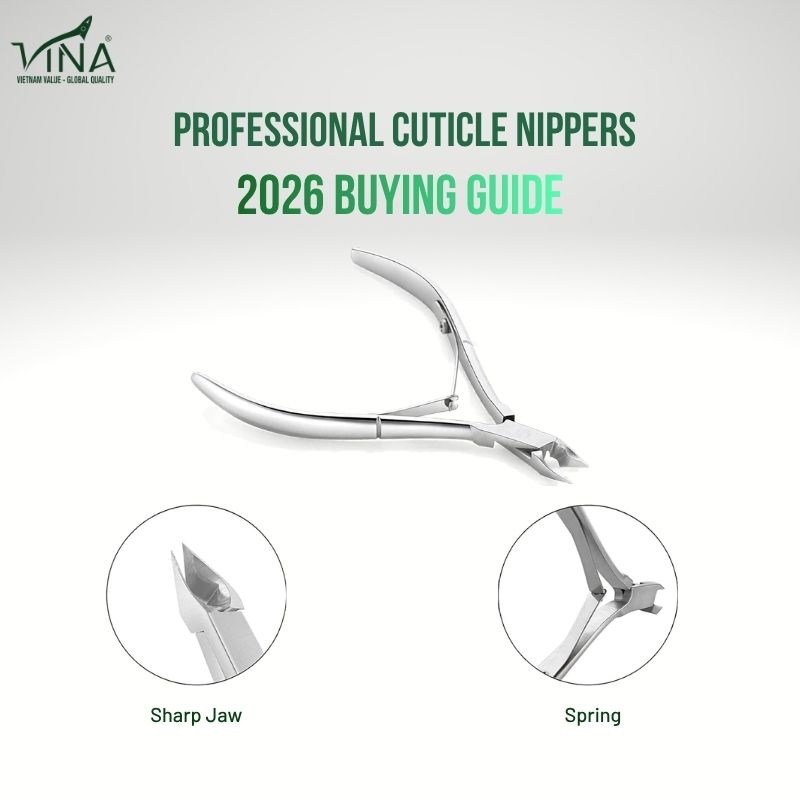
Professional nail clippers are built differently from the nail clippers commonly sold at drugstores, and the difference can be seen in three key areas: the steel, the jaw, and the spring mechanism.
A professional tool needs to deliver consistent cutting performance while remaining comfortable to use throughout a busy salon day. The right combination of steel hardness, jaw size, spring design, and handle shape can make a significant difference in precision, durability, and hand fatigue.
This guide explains what separates professional nail clippers from consumer-grade tools, how different materials and designs affect performance, and what salons should look for when purchasing tools for a single workstation or an entire salon.
Nail Clipper or Nail Nipper: Which Term Is Correct?
In the professional nail industry, professional nail clippers and nail nippers generally describe the same type of tool: a spring-loaded, plier-style instrument designed to trim and shape the nail plate.
This is different from a cuticle nipper, which is designed specifically for trimming skin around the nail.
Manufacturers, distributors, and professional nail technicians often use “nail clipper” and “nail nipper” interchangeably. Vina Nippers, for example, lists its professional nail tool range under the term “Nail Nipper,” including product codes from VNN-18 through VNN-999.
The important distinction is between a nail nipper and a cuticle nipper.
Professional nail clippers use a stronger, heavier jaw designed to cut through the harder nail plate. Cuticle nippers use a thinner, more precisely angled jaw intended for skin.
Using a cuticle nipper to cut nails, or a nail nipper to trim cuticles, can reduce blade life and produce a less precise result.
Steel Type: Carbon Steel Nail Clippers
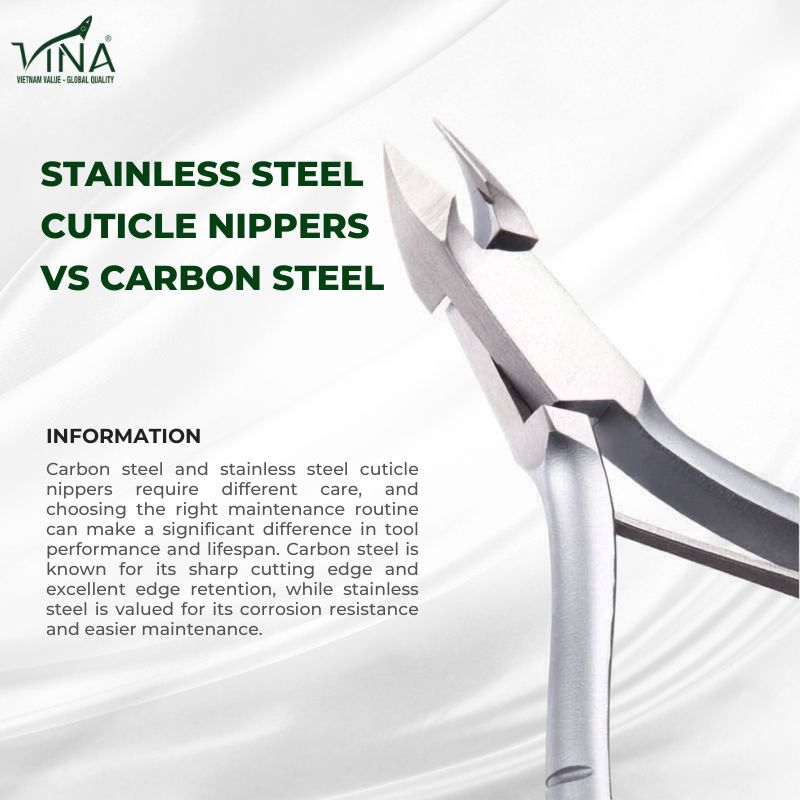
Most professional nail clippers are manufactured from carbon steel because of its hardness, edge retention, and ability to maintain a sharp cutting edge.
Carbon steel can be heat-treated and hardened specifically for cutting through thick or hard nail plates without excessive chipping, bending, or deformation at the cutting edge.
Vina Nippers’ carbon steel nail nippers include VNN-18, VNN-19, VNN-20, VNN-333, VNN-666, and VNN-999.
Nail plates are considerably harder than cuticle tissue, so a cutting edge designed specifically for nails needs different characteristics from a cuticle nipper. Carbon steel provides the hardness and edge retention needed for repeated nail cutting.
The trade-off is maintenance. Carbon steel can be more susceptible to corrosion than stainless steel, so professional nail clippers made from carbon steel should be thoroughly dried after every disinfection cycle.
For technicians who regularly work with thick or resistant nails, the additional drying step can be worthwhile because of the cutting performance and edge retention carbon steel provides.
Jaw Size and Hand Fit
Jaw size is another important factor when choosing professional nail clippers. The jaw must be large and strong enough to cut the types of nails commonly encountered in the salon without requiring excessive hand pressure.
Vina Nippers’ professional nail nippers are larger overall than its cuticle nippers, measuring approximately 113 mm in length and 76 grams in weight, compared with approximately 106 mm and 54 grams for its carbon steel cuticle nipper line.
The difference reflects the heavier-duty jaw required to cut through nail plate rather than skin.
Hand fit is equally important. Several Vina Nippers nail nipper models are designed around Asian hand proportions, which can make a noticeable difference during extended daily use.
A tool that feels too large, too small, or uncomfortable in the hand can contribute to fatigue and reduce cutting precision. For salons with high service volume, ergonomic fit should therefore be considered alongside blade sharpness.
Spring Mechanism: Single Spring vs. Double Spring
The spring mechanism directly affects how professional nail clippers feel during repeated use.
There are two common designs: single spring and double spring.
A single spring provides a lighter and faster return after each cut. This can be particularly comfortable for technicians who process a high volume of clients because less resistance can help reduce hand fatigue during a long shift.
A double spring provides greater resistance and control. Some technicians prefer this design when working with thick or resistant toenails because the additional resistance can provide a more controlled cutting feel.
Vina Nippers offers both spring configurations within its professional nail nipper range.
- VNN-18, VNN-19, and VNN-20: Single spring
- VNN-333, VNN-666, and VNN-999: Double spring
This allows salons to choose the spring mechanism according to working preferences without having to change to a completely different product range.
Finish and Handle: Practical, Not Just Cosmetic
The finish of professional nail clippers affects more than appearance. It can influence grip, glare, and how easily technicians can inspect the surface of the tool under salon lighting.
A grey matte finish minimizes glare and provides a practical appearance for daily professional use. This is why matte finishes remain common on working tools.
A grey mirror finish provides a polished appearance and makes certain surface residues or imperfections easier to see during inspection.
Gold finishes, available on selected models such as the VNN-20, provide the same basic cutting function while offering a more premium appearance. Distributors may choose these models for a higher-end retail range, while salons may use them as part of a signature tool collection.
Handle design also affects comfort.
Vina Nippers’ professional nail nipper line uses a semi-curved handle designed to balance control and comfort during extended use. Compared with an extremely straight or heavily curved grip, a moderate curve can provide a practical balance between hand positioning and cutting control.
Fingernail Clippers vs. Toenail Clippers: Does the Difference Matter?
Many professional nail clippers are designed to work on both fingernails and toenails. For many clients, this is a practical approach because jaw size and cutting strength are more important than whether the product is labeled specifically for fingernails or toenails.
However, thick or resistant toenails can require a stronger tool.
A model that performs comfortably on standard fingernails may feel underpowered when cutting significantly thicker toenail plates. This is especially relevant for salons with a high volume of pedicure services.
For this reason, salons that regularly work with thick toenails may benefit from stocking a second, heavier-duty nail nipper specifically for those services.
Choosing professional nail clippers based on the actual nail types handled by the salon can improve both cutting efficiency and technician comfort.
Maintenance Follows the Same Rules as Cuticle Nippers
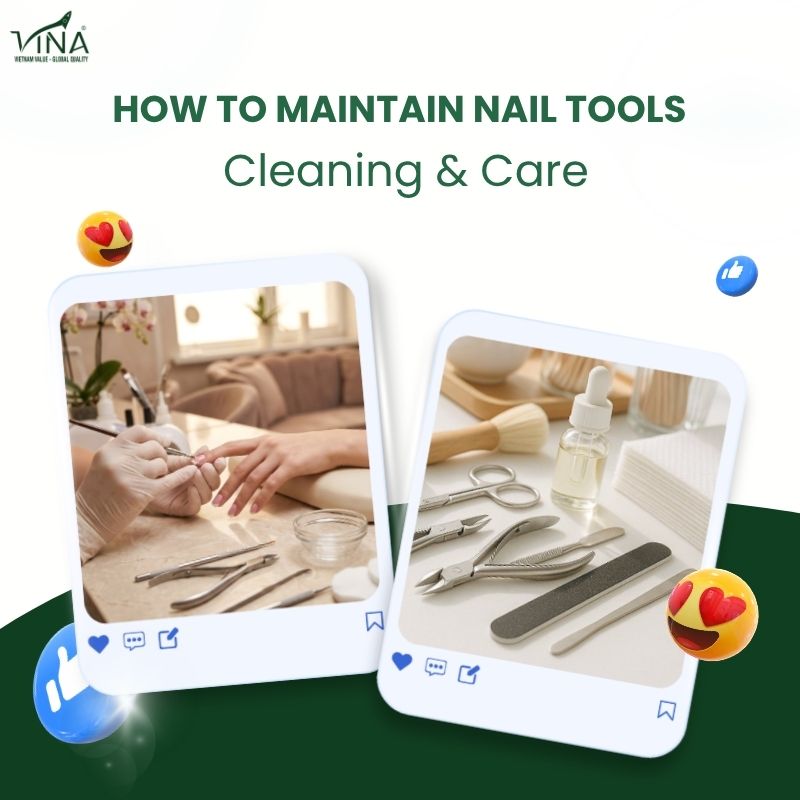
Proper maintenance is essential for keeping professional nail clippers sharp and functional.
Because many professional nail nippers are made from carbon steel, they require a maintenance routine similar to carbon steel cuticle nippers.
The basic process is:
Cleaning → Disinfection → Thorough Drying → Proper Storage
After every disinfection cycle, the tool should be dried thoroughly rather than left in a wet tray. Moisture left on the blade or hinge can increase the risk of corrosion, particularly with carbon steel.
Professional nail clippers should also be stored separately from other metal tools whenever possible. Contact between cutting edges can cause small chips or damage that reduces cutting performance.
Regular sharpening is another important part of maintenance. A professional nipper should be sharpened before the cutting edge becomes so dull that it begins crushing or pulling the nail instead of cutting cleanly.
See our guides on carbon steel vs. stainless steel maintenance and how to disinfect nail tools between clients for more detailed maintenance information.
What to Check Before Buying Professional Nail Clippers for a Salon
Before purchasing professional nail clippers, salons should evaluate more than price or appearance.
1. Confirm the Steel Type
Check whether the manufacturer clearly identifies the material as carbon steel or stainless steel. Avoid relying solely on vague descriptions such as “surgical steel” without specific material information.
2. Check the Jaw Size
Choose a jaw size that matches the nail types your technicians commonly work with. A standard jaw may perform well on average nails but struggle with consistently thick toenails.
3. Check the Spring Design
Ask whether the tool uses a single or double spring. This can affect hand fatigue and cutting control throughout a full working day.
4. Inspect the Hinge
When the tool is open, the hinge should feel stable without excessive side-to-side movement. A loose hinge can affect cutting precision and is an important quality indicator.
5. Consider Available Finishes
For salons purchasing tools in volume, check whether the same base model is available in different finishes. This allows front-desk retail products and back-of-house working tools to be sourced from the same product range.
6. Consider Hand Comfort
A professional tool should feel balanced in the technician’s hand. Ergonomics become increasingly important when the same tool is used repeatedly throughout the day.
Frequently Asked Questions
What are professional nail clippers?
Professional nail clippers are heavy-duty, plier-style nail cutting tools designed for repeated professional use. They typically use hardened steel, a precision cutting jaw, and a spring mechanism designed to provide consistent cutting performance.
Is a nail clipper the same as a nail nipper?
Yes. In professional use, these terms commonly describe the same type of spring-loaded, plier-style instrument used to trim the nail plate.
They are different from cuticle nippers, which have a thinner jaw designed specifically for trimming skin around the nail.
What steel is used in professional nail clippers?
Many professional nail clippers, including Vina Nippers’ VNN series, use heat-treated and hardened carbon steel. Carbon steel is well suited to cutting thick or hard nail plates because it can provide excellent hardness and edge retention.
Do professional nail clippers come in different sizes?
Yes. Jaw size and overall tool dimensions can vary according to the intended nail thickness, application, and hand size.
A smaller nail nipper may feel more comfortable for certain hands and nail types, while a larger model can provide additional cutting capacity for thick toenails.
Should I choose single-spring or double-spring nail clippers?
Single-spring professional nail clippers generally provide a lighter and faster return, which can help reduce hand fatigue during high-volume work.
Double-spring models provide additional resistance and control, which some technicians prefer when cutting thicker or more resistant nails.
Why do my nail clippers feel different from my cuticle nippers?
They are designed for different jobs.
Professional nail clippers use a heavier jaw designed to cut through the hard nail plate, while cuticle nippers use a thinner, angled jaw designed for skin.
The two tools should not be treated as interchangeable because using them for the wrong application can shorten the cutting edge’s working life.
Choosing the Right Professional Nail Clippers for Your Salon
Choosing professional nail clippers ultimately comes down to matching the steel type, jaw size, spring mechanism, and handle design to the nail types your technicians work with most frequently.
Carbon steel provides excellent hardness, sharpness, and edge retention when properly maintained. Different jaw sizes allow salons to select tools according to nail thickness, while single- and double-spring options provide different levels of speed, comfort, and control.
Vina Nippers manufactures its professional nail nipper range directly, offering single-spring and double-spring options in multiple finishes. Each tool is hand-hardened and prepared for professional cutting performance.
Whether you are stocking a single nail station or purchasing tools for an entire salon or distribution business, selecting the right professional nail nipper can improve cutting consistency, technician comfort, and long-term tool value.
Browse the full Vina Nippers range or request wholesale pricing for your salon or distribution business.

Most viewed article

Top 5 Best Cuticle Nippers for Nail Technicians

Mastering the Art of Choosing the Best Cuticle Nippers: A Guide

How to Use Cuticle Nippers Properly: A Step-by-Step Guide by Vina Nipper

Toenail Nippers vs. Cuticle Nail Cutter: Choosing the Best Tools for Nail Car